Total Pageviews

Tuesday, March 24, 2020

Shutdown Food for Thought: What are You Watching?

So this afternoon as I was scrolling through my Twitter feed and found a friend that posted this amazing video by Mark Rober, one of my favorite YouTube Channels.

I immediately stopped what I was doing, pulled the video up onto our TV at home and had my kids watch it.
In all of our scrambling to find content and ideas to share with our students and families, we've overlooked some really good content because it tends to get a negative connotation in our classroom focused minds. Our kids are out there streaming video and watching TV already, why not point them toward some awesome content to consume.
Here's a list of my favorites (by NO MEANS and exhaustive list, just my personal faves):


  1. CNN Ten
    Very simple... News in 10 minutes. My daughter's Social Studies teacher has been starting class with 10 minutes of news this whole school year, so we've incorporated it into our COVID19 daily routine.
  2. Mark Rober on YouTube
    In addition to the awesome, timely video, Mark's channel is chock full of kid-friendly, fun, entertaining, smart Science, Inventing, and Engineering videos created by a former NASA engineer.
  3. Smarter Everyday on YouTube
    My absolute favorite YouTube channel of all time. Destin is a rocket scientist who, until recently, worked as a Missile Flight Test Engineer at Redstone Arsenal. His channel feeds my "learning happens through curiosity" mantra better than any other out there. If you haven't seen it already, his Backward Bike video is mind-bending.
  4. Slo Mo Guys on YouTube
    Ok, so this one is a little bit more of a guilty pleasure, but still packed full of Science, Physics, and Curiosity. Some of the visuals they present on screen are completely hypnotizing.
  5. TED
    For younger audiences you might want to do some pre-screening as some of the topics and content can occasionally be a little touchy, but I would struggle to find a better place to hear awesome, motivating, thought provoking outlooks from some of the world's most awesome thinkers. They also have a TED Ed section more suitable for kids, though.  Sir Ken's talk from 14 years ago still gives me goosebumps when I watch it and has inspired a lot of my outlook on Education.

Please feel free to share these (and maybe your favorites) with your students and their families. In addition to being educational, they're really entertaining, and I'm sure your students would love to have you send them to YouTube to watch some stuff. I would also encourage you to poke around these channels yourself over the next couple of weeks and be entertained as well. I'd be willing to bet you might just find something for you to incorporate into your classes in the future. Happy watching.

Monday, March 23, 2020

Shutdown Food for Thought: Asking for a Friend

Ok, so not really shutdown related, but just something to get your brain working this Monday morning...
A **ahem** friend of mine wants to know... I **oops** HE was walking through the local park the other day watching some kids skateboarding on the skate park. Besides the fact that they weren't doing a great job of social distancing, my friend ;-) started wondering to himself. These kids were there for what seemed like hours practicing, and failing at, the same trick on one of the ramps over and over. What is it about this trick that makes someone spend so much time and so much pain of falling on the concrete just to land it once and then probably fail a hundred more times before landing it again? Not only that, but how could we harness that in the classroom? Why isn't it a given that failure is expected of our students because failing is the way we learn? What type of classroom culture would have to exist for students to be willing to fail repeatedly and willingly to learn and succeed after hundreds of attempts?
I'm sure a lot of you are like me... You know that feeling of failing and not giving up (almost to the point of obsession), but one fall off of that skateboard and I'm out. That kick flip isn't important to me. But... It is important to a lot of our students. The first step is to know our students. Find their kick flip and harness it as a part of your classroom culture. Make them willing to skin those knees because what you have to give them is worth it to fail a few times.
Here we go for another week!

Friday, March 20, 2020

Shutdown Food for Thought: It's OK to Laugh

In the style of a typical Friday, I'm guessing we're all in that "end of the week" mindset where we're tired, slap-happy, and ready for the weekend. For as weird as this has been, I want to encourage you to put work and school aside and try to enjoy as much of a normal weekend as possible while still social-distancing and not travelling. That becomes harder to do when we've been working virtually all week feeling tied to our devices looking for updates, news, connections, etc., but please take some time to disconnect. Give your brain and your eyes a break. Put that phone on Do Not Disturb, close that Laptop/Chromebook lid, and take some time for yourself. There will be plenty of time to get that inbox cleaned up on Monday morning when you open it back up.
In that slap-happy Friday vein, I know we've all heard the cliche that laughter is the best medicine. On a personal note, it took some good old-fashioned belly laughs with my family after my Dad passed away a few years ago for me to truly subscribe to that cliche, but now I do wholeheartedly. So, I just thought I'd share a few of my favorite memes from this past week to hopefully give you a little chuckle and get to the weekend.
No other statement has more perfectly described my wife on Monday morning of this past week.  Sorry, Helen, but it took less than two hours to wipe that whiteboard and replace the perfect plan with a workout.

Hey, something is better than nothing, right?

I'm sure all of us could get on board with this one...

Those of us with our own kids might sympathize with this one.  I'm not saying this schedule matches my family 100%, but it's close enough to strike a nerve with me.  The only thing missing is the part where they turn into rabid, fighting raccoons any time they enter the same room as the other.
But really, in all seriousness, make sure to take some time to take a break for yourself this weekend. Those of us that are caretakers, and I know there are plenty of us, need to remember that we need to take care of ourselves if we are going to continue taking care of everyone else. Part of that is remembering to take a break. Home all week or not, tomorrow kicks off the weekend. Use it to refresh and recharge. I'll be back Monday morning in your inbox!

Thursday, March 19, 2020

Shutdown Food for Thought: Share Your Planted Seeds

We made it to Thursday. Does anyone else feel like these days are both shorter and longer at the same time?
In follow-up to yesterday's message about feeling disconnected, I began wondering how things are going with everyone else and if you've had any successful moments with your students and their families (or with your own kids) now that we've settled into this a bit.
I personally had some awesome learning moments with my kids when we ventured out to Sleepy Hollow State Park for a hike. What started as an escape from the house for some fresh air turned into a great learning experience in reading maps, navigating using the map with the sun's position, talking about how the sun moves across the sky in different times of the year, identifying trees by their bark and branching characteristics, all while getting the blood flowing with a 4-mile hike.
All the while I couldn't help think about how their curiosity was driving their learning rather than someone else telling them what was important. It really brings a tweet from Jessie Heckman that I saw recently to life,
But... these things are all easier said than done. We need to help each other out a bit by sharing our stories and successes with each other to help us plant those seeds. I've heard of some of our teachers using Flipgrid for read-alouds with their classes and having students read back... Awesome!

I've seen friends creating stop-motion videos with their kids at home... Awesome!
I've seen Kindergarten teachers sending directed drawing videos to their students... Awesome!
I've heard of teachers using the current events as a way to "make math real" by investigating how experts are modeling the outbreak... Awesome!

I've heard from a teacher that she's hand-writing and snail-mailing letters back and forth with her students pen-pal style... Awesome!

Please remember through all of this that children WILL learn on their own. It's been happening for a couple hundred-thousand years. Plant a seed and set them loose. Then help each other out by sharing those seeds with the rest of us so we can sow them even wider.

Wednesday, March 18, 2020

Shutdown Food for Thought: Disconnected


Good Wednesday Morning,
Despite my best efforts to treat last weekend like a normal, true weekend, my brain was already telling myself that something was weird and different. Even though I'm lucky to have a family around me, I already felt oddly disconnected, and that's coming from an introvert who enjoys being alone. The most common thing I've heard from friends (in person and through social media) and replies to the first couple of these emails have been similar comments about feeling disconnected. If we're all feeling this way, imagine how some of our students must be feeling. Those Google Classroom posts, Flipgrid read-alouds, and Facebook posts are important to let students know that you're still there and thinking of them. Please don't forget to encourage them to participate back. That same disconnect is what is driving me to write these daily messages to you. Sure, I'm a math teacher by trade, but I find something soothing about writing (and I'm grateful that the ELA department is taking it easy on correcting all of my horrible mechanics). Maybe some of your students might be the same. When you're reaching out to them, don't forget to encourage your students to reach back. A digital community is still a community.
Another thing that brings me comfort and a small sense of connection is my social media presence. I personally rely on Twitter to connect to my tribe. I've slowly built up a great network of friends, colleagues, and other educators over the past few years with whom it has been great to share ideas, generate thoughtful discussions, and glean activities and inspiration. Most of the ideas that I shared yesterday came from there, and Twitter is full of educators with great ideas and great passion to share. I would encourage anyone who doesn't have an account to give it a shot, follow a few people, and see what it's like while you've got some extra time. Where to start? Create that account, then check out some good hashtags. #MichEd is a good one with a strong and active community, as is #cmakers. #MiDigCit is a fairly recent one focusing on Digital Citizenship with a group of Michigan educators spinning off of the national #DigCit discussion. In addition to these broad hashtags, you'll surely find many content and age specific hashtags that you can use to customize the content you see and consume. When you find folks that you enjoy hearing from, you can follow them with a click, and their content will show up in your main feed. My Twitter handle is @Everyday_Genius if you want to see the way I use the platform.
If you already have Facebook in play, awesome. Use it during this time to fight that disconnected feeling as well as making your students and families feel connected as well. If you're feeling especially frisky, you could also use some of this time to explore some other social media platforms that our students are using. Give Instagram (iOS, Android), Snapchat (iOS, Android), and TikTok (iOS, Android) a try and see what they're all about.

Tuesday, March 17, 2020

Shutdown Food for Thought: See the Opportunity


Happy Tuesday Morning,
Just to preface... What follows is my opinion and meant to encourage thought and discussion. I don't claim to be right, only to have an opinion. 

It seems like everywhere I look I see companies and other individuals talking about tools and strategies for moving to a virtual style of education. While these things are nice to keep in mind, and maybe we'll need to think that way at some point, I think that we're missing an opportunity (and the bigger picture) by jumping to this type of thinking right away. Remember when learning was about engaging your brain to think and grow and make sense of the world around you, not mastery of CCSS.ELA-LITERACY.RF.3.3.A? How many times in the past few years have you had that nagging thought that it would be awesome to do a certain activity with your students, but you don't have time because of everything you have to "cover?" I would urge you to reach out to your students and their families with ideas and activities that fit in that category. Get them discussing, making, experiencing, questioning, growing without being "for a grade" or to check a box. Give them a spark rather than an assignment and encourage them to share their experience with you and others.
Just a few of the ideas that have caught my eye recently:
  • Our Middle School sent out this Bingo game to students with a challenge to submit their "work" to be entered for prizes. I've shared this forward to a number of other teacher friends to adjust for their students, and they loved it.
  • @dailystem on Twitter shared out these 77 Simple STEM Activities for Families and then followed up with 77 More (just in case 77 wasn't enough?). I plan to steal ideas from this list for my own nuggets at home, and I'm guessing you might have some students and parents who would appreciate the ideas. Just be careful to point out that not all of these activities would be great in our current "social distancing" format of daily life.
  • My wife stumbled across a great 30 Day Lego Challenge that I just had to share. Lego is one of the all time great examples of how rich learning can be when it happens through play.
  • Don't overlook the amazing learning opportunities hidden in a pile of cardboard destined for the recycling center. Tell me that building a Geodesic dome isn't PACKED with high school level math, engineering, and problem solving... I'm guessing many of us might start accumulating cardboard, also, seeing as how online ordering is the only way to get toilet paper right now.
  • Start a class Padlet, Flipgrid, or even Google Classroom discussion for students to be able to connect and share some of the things they are doing.

I think that for as uncertain as all of this feels and for all of the negatives that come to our minds related to our current situation, it's very important for us to step back and remember that this is a great opportunity for us to remind our students and ourselves that not all learning has to be tied to a standard. Sometimes we just have to experience it and figure stuff out on our own terms.

Monday, March 16, 2020

Shutdown Food for Thought: Boredom is Not a Disease

I'm not sure if anyone even reads this any more since I have so neglected it for way too long, but I have set a goal to send a blog-post-style email to the teachers and staff at my school each morning.  Being that these emails read like a blog post, I decided I should post them here as well.  If anyone is still out there, here comes a daily "Shutdown Food for Thought" while we're all social-distancing.

So I thought I would set a goal for myself to stay in touch each day with an email each morning with some things to think about as we go through this weird experience.  I hope I'm not just spamming your inboxes, but rather I look forward to the discussion that my opinions and outlook sparks.  Feel free to read, reply, argue, discuss, etc.
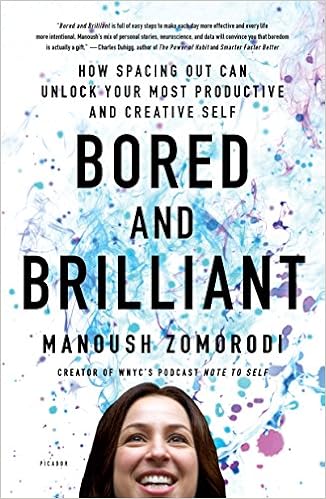
As my own family was coming to terms with the prospect of 3+ weeks at home together with no school and working remotely, my wife and I (just like many of our parents) were discussing what we are going to do to keep our kids busy, engaged, inspired to learn, sane, etc. all while not getting to the point that they are ripping each others' faces off, my brain immediately went to a Podcast I listened to a few years ago with Manoush Zomorodi about the importance of being bored for our brain's creative function.  Maybe it was partially inspired by the fact that she was just recently the opening keynote speaker at the MACUL conference, but it seemed pretty applicable to our current situation.  I made my 8 year old son listen to it in the car on the way to and from the grocery, and he immediately said, "I think Grace (our daughter) should listen to that too."   The episode is linked below to a few popular podcast platforms.  You can also play it through any web browser.  I would encourage you to carve out 43 minutes, and give it a listen.
Zomorodi talks about her work showing how important moments of boredom are for our creative brain and the way mobile phones have taken that away from us and made us very uncomfortable with the thought of being bored.  She then talks a lot about the importance of learning some self regulation of our time and connection to our phones, and how the right response isn't an "all or nothing" answer but rather a gray area compromise somewhere in the middle.  I made some adjustments to my own behavior (fine-tuning notifications, app timers, etc.) after listening to this episode a few years ago, and it was a great adjustment for me personally.  I wanted my kids to listen as well (it is a kid friendly episode if you would like to do the same) so that I could remind them of it when I hear the phrase that I know is coming... "I'm boooored."  New standard response will be to remind them that being bored is really good for your brain, so it's ok.  
If anything, at the beginning of this time away from school and work, look for opportunities to slow down a bit, allow your brain to wander, and examine some ways to develop a better relationship with your cell phone.
If you feel so inclined, feel free to share this story/message along to your students and/or parents of your students and encourage them to embrace a little bit of boredom back into our lives.  This could also be a great discussion starter as we investigate ways to introduce our students to thoughts about their digital well-being.

Podcast #342: Why Boredom is Good for You | The Art of Manliness (This link also includes a transcript of the episode if you'd rather read it than listen to it)
If this topic inspires you to learn more, Zomorodi's book, "Bored and Brilliant: How Spacing Out Can Unlock Your Most Productive and Creative Self" is available on Amazon for less than $10.